




 Whitman Expo
-
Imperial Treasury Currency & Banknote Values
Banknote Book® Price Guide

Sort by
Sponsor

Sponsor

Sponsor

Sponsor

Sponsor

Legal Disclaimer
The prices listed in our database are intended to be used as an indication only. Users are strongly encouraged to seek multiple sources of pricing before making a final determination of value. CDN Publishing is not responsible for typographical or database-related errors. Your use of this site indicates full acceptance of these terms.
The Imperial Treasury series of China National Banks in the World Currency contains 30 distinct entries.
Paper was invented in China around 100 CE, and woodblock printing was also invented in China around 600 CE. The first banknotes appeared, as far as is known, around 50 years later. It is, however, still unknown, exactly how many and what kinds of banknotes were issued in China over the 750-year period between circa 650 CE and the early 15th century, when issuance ceased.
All examined notes carry a Chinese title that translates to Banknote of the X Dynasty, where X is the name of the Chinese Imperial Dynasty. Each Emperor within a Dynasty had at least one, and in many cases several, reign names. If a reign name was changed mid-reign, it was usually due to auspicious, or inauspicious, events. The reign name and year number thereof generally appear at bottom left front.
The three imperial dynasties most relevant to Chinese banknotes (name and dates in parentheses) are the Tang (唐, 618 - 907),
Yuan (元, 1271 - 1368), and Ming (明, 1368 - 1644). Between the Tang and the Yuan Dynasties, China was divided and a number of regional dynasties were active, including the (Northern and Southern) Song (宋, 960 - 1279), Liao (遼, 916 - 1218), and
Jin (金, 1115 - 1234) Dynasties. The Chinese character for the dynasty name generally appears as the second character from the right on the note title on top (the rightmost character being 大 = “Great,” so 唐大 = “Great Tang,” etc.). No specific issuer name is stated and this catalog presumes they were emitted by the Imperial Treasury, or similar institution.
Due to their rarity and antiquity, buyers should be extremely skeptical of any unauthenticated Imperial Treasury banknote available on the market.
See More See Less
Sponsor
Sponsor
 Loading more ...
Legal Disclaimer
The prices listed in our database are intended to be used as an indication only. Users are strongly encouraged to seek multiple sources of pricing before making a final determination of value. CDN Publishing is not responsible for typographical or database-related errors. Your use of this site indicates full acceptance of these terms.
Available on Greysheet Marketplace
View All
Buy Now: $3,500.00

Buy Now: $300.00

Buy Now: $775.00

Buy Now: $750.00
Dealer Directory
View All Dealers




Greysheet News
View All News

Numismaster.com ceased operations on July 31, leaving paid digital subscribers scrambling to pursue other options for their numismatic information.

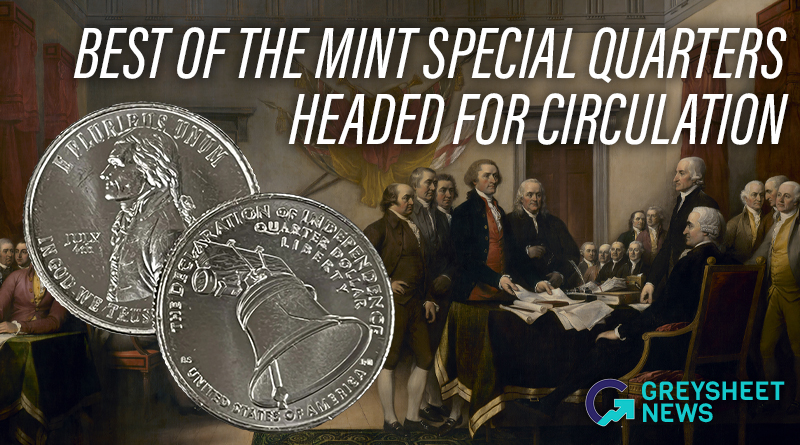
The search is on for special quarter dollars that will be placed in circulation by the United States Mint as part of the nation's Semiquincentennial celebration.

With the month of July and all the celebrations of Independence Day behind us, the rare coin market looks with anticipation to August.
Events
View All Events
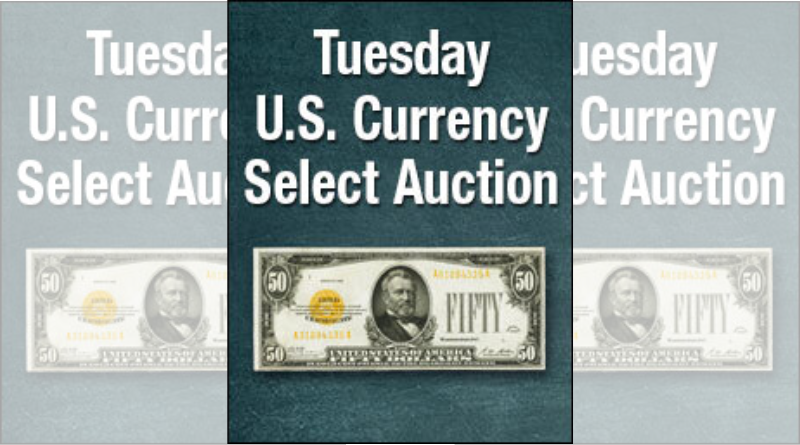

Heritage Auctions

Tuesday, June 2, 2026
Heritage Auctions
Tuesday, June 2, 2026
Heritage Auctions
Wednesday, June 3, 2026