




 Whitman Expo
-
Issue of March 25, 1737
Greensheet & Friedberg® Price Guide


Sort by
Sponsor
Sponsor

Sponsor
Sponsor

Sponsor

Legal Disclaimer
The prices listed in our database are intended to be used as an indication only. Users are strongly encouraged to seek multiple sources of pricing before making a final determination of value. CDN Publishing is not responsible for typographical or database-related errors. Your use of this site indicates full acceptance of these terms.
The Issue of March 25, 1737 series of New Jersey Colonial Currency in the U.S. Currency contains 9 distinct entries.
£50,000 (£40,000 plus £10,000 to exchange for worn bills) was issued in Proclamation money authorized by the Act of Aug. 13, 1733 subject to Royal approval, which was finally granted on May 4, 1735. Although he news of approval came promptly after authorization, the formal document was deliberately withheld by an obstinate American official until was ordered on June 28, 1736 and again on August 24, 1736 to deliver it. The issue was secured by mortgage loans and known as the "Third Bank." Legal tender "between man and man" until Mar. 25, 1753 and invalid after Sept. 25, 1753. The weight equivalent in silver plate is the same as was provided for prior issues. Printed by Benjamin Franklin whose Pennsylvania Gazette on July 22, 1736 said that he was "at Burlington with the Press, laboring for the public Good to make Money more plentiful." In this issue Franklin invented and introduced the art of nature printing from leaf casts by transferring a sage leaf image to the back of the bills. The Assembly was "to get said bills printed in the best and cheapest manner" and paid Franklin £160 for the work. William Bradford claimed he would have printed the bills for 100 or less and that the contract was political. Franklin convinced the Assembly that the protection of his nature prints against counterfeiting was worth the higher cost. Thomas Leech made the face cuts. Only two examples of this issue are known. In 1772 on the death of Robert Hude 2,724 bills of this issue including all denominations were found partially or fully signed in his effects and were ordered burned by the Provincial Council. Signers were John Allen, Isaac Decow, Robert Hude, and John Stevens. Alternate signers were William Cox and Robert Smith.
See More See Less



 Loading more ...
Legal Disclaimer
The prices listed in our database are intended to be used as an indication only. Users are strongly encouraged to seek multiple sources of pricing before making a final determination of value. CDN Publishing is not responsible for typographical or database-related errors. Your use of this site indicates full acceptance of these terms.
Available on Greysheet Marketplace
View All

Buy Now: $975.00

Buy Now: $1,225.00

Buy Now: $4,500.00

Buy Now: $19,995.00
Dealer Directory
View All Dealers



Greysheet News
View All News
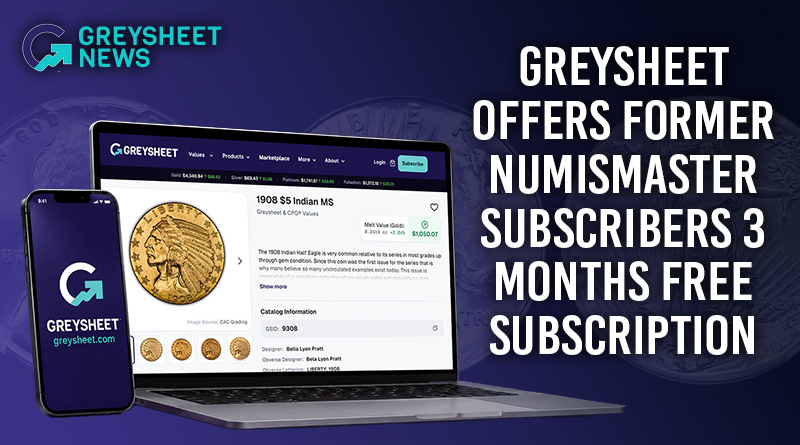
Numismaster.com ceased operations on July 31, leaving paid digital subscribers scrambling to pursue other options for their numismatic information.

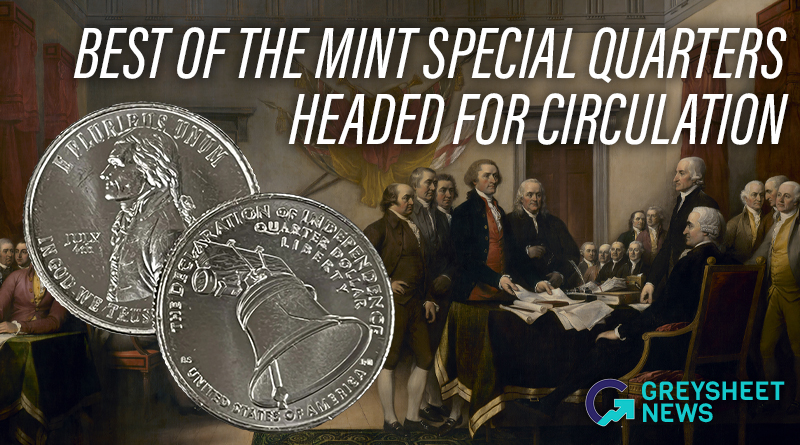
The search is on for special quarter dollars that will be placed in circulation by the United States Mint as part of the nation's Semiquincentennial celebration.
With the month of July and all the celebrations of Independence Day behind us, the rare coin market looks with anticipation to August.
Events
View All Events
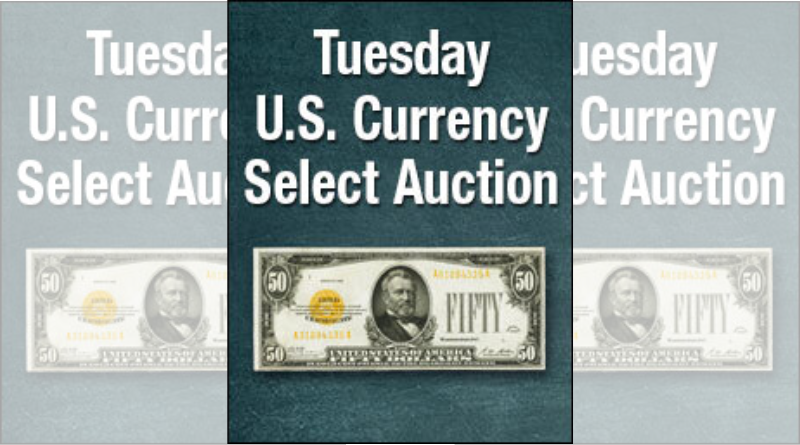

Heritage Auctions

Tuesday, June 2, 2026
Heritage Auctions
Tuesday, June 2, 2026
Heritage Auctions
Wednesday, June 3, 2026