




 Whitman Expo
Weekly World Mint Coinage: July 16, 2026
New coins from Canada, Hungary, and Spain.
by Michael Alexander |
Published on July 16, 2026

Download the Greysheet app for access to pricing, news, events and your subscriptions.
Subscribe to RQ: Red Book Quarterly for the industry's most respected pricing and to read more articles just like this.
Advertisement
Canada - Royal Canadian Mint
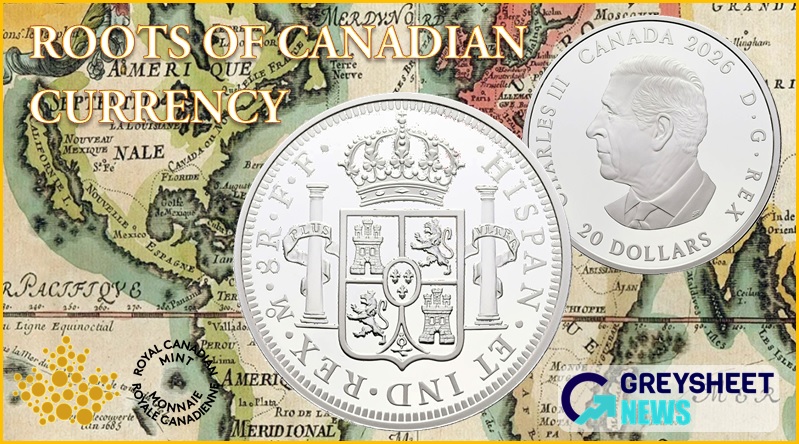
Silver Proof Coins Explore the Origins of Canadian Currency
The Royal Canadian Mint launch the first-ever joint issue with Spain’s FNMT - Real Casa de la Moneda. Entitled The Real de a Ocho - Roots of Canadian Currency, the influence of the Spanish real de a ocho was particularly significant in the territories that later formed Canada. These coins dominated monetary circulation for much of the 18th and 19th centuries, being used in trade and the daily economic life of the North American colonies.
The Canadian experience with the eight reales began as it was the most common silver coin in circulation, including their fractional pieces which were officially recognised as legal tender in Canada under colonial law, and pre-dating confederation in 1867. Local merchants and governments utilised exchange systems such as the ‘Halifax rating’ to calculate the exact value of goods in Spanish dollars. The real coins prepared Canada to eventually develop and adopt a dollar and cent system of exchange pre and post-confederation. Spanish eight reales coins were frequently physically cut into two, four or eight pieces or ‘bits’ to make change, which is the origin of the term ‘two bits’ commonly used in North America which meant a quarter dollar.
Spanish and Mexican eight reales coins officially ceased to be legal tender as the colony began aligning its currency with the decimal system and the U.S. dollar. Following Confederation in 1867, the Dominion of Canada issued its first standardised national coinage from 1870. While the rest of British North America eventually based their decimal currencies on the US dollar, Newfoundland adopted a monetary unit directly based on the Spanish dollar, which kept its currency slightly stronger than the Canadian dollar until 1895.
The reverse of the coin replicates its distinctive design of eight reales coins minted during the rule of King Carlos III from 1759 until 1788. The design depicts the Pillars of Hercules along with the motto PLUS ULTRA placed on either side of the royal crest of Spain indicating the kingdoms of Castile and Leon which were the united realms of Ferdinand and Isabella. The design is surrounded by the legend HISPAN ● ET IND ● REX ● Mo ● 8R ● F ● F ● The legend HISPAN ● ET IND ● REX or, Hispaniarum Et Indiarum Rexindicated the Spanish monarch was King of Spain and the Indies. The mintmark Mo indicated the coin was produced at the Mexico City Mint which was established in 1535. The denomination 8R indicated the 8 reales face value and F ● F ● were the initials of the assayers Francisco de la Fuente and Francisco Antonio de Acevedo who verified the coin's weight and silver purity.The obverse includes the effigy of King Charles III created by Canadian artist Steven Rosati and depicts the king facing to the left surrounded by the legend CHARLES III CANADA 2026 D G REX. The denomination 20 DOLLARS is placed below the King’s likeness along the lower rim.
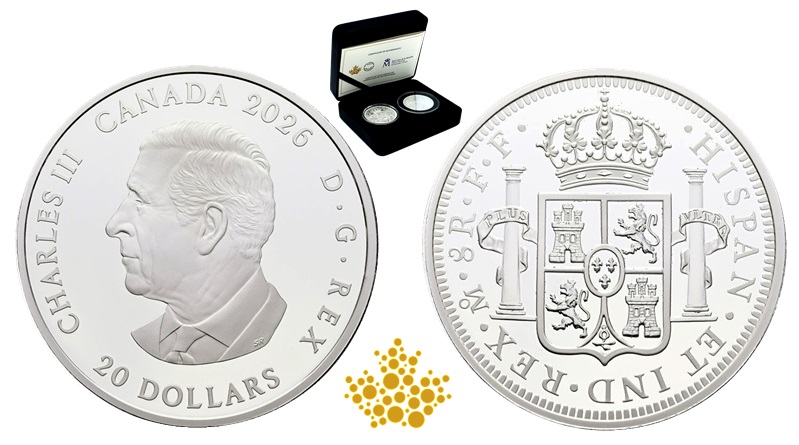
| Denomination | Metal | Weight | Diameter | Quality | Maximum Mintage |
| 20 Dollars | .999 Silver | 31.1 g. | 37.2 mm. | Proof | 6,500 sets |
Each Proof quality coin is encapsulated and presented in a custom two-coin case accompanied with certificates of authenticity from the both the Royal Canadian Mint and FNMT - Real Casa de la Moneda. Of the 6,500 sets that comprise the worldwide mintage, 4.000 sets will be distributed exclusively in the Americas. For additional information, please visit the e-webshop of the Royal Canadian Mint.
Hungary – Hungarian Mint
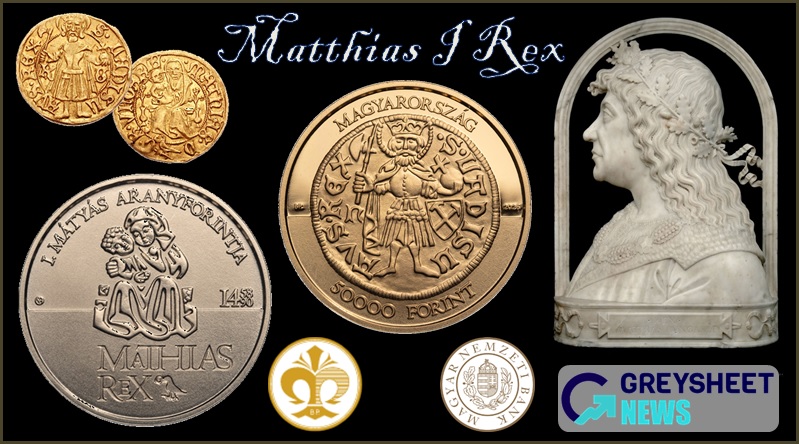
Historic Gold Florin of King Matthias I Features on Proof Collector Coins
The Hungarian National Bank continues their Hungarian Gold Florins from the Middle Ages series. The latest gold Proof coins are the ninth in a series first launched in 2012 focusing on the history and beauty of the legacy gold coins issued during the medieval era of the Hungarian kingdom.
Hungarian excellence in minting achieved high European standards during the rule of King Matthias I Corvinus, also known as the Raven King who ruled Hungary and Croatia from 1458 to 1490. He put great emphasis on maintaining the stability of the gold florin. Prior to his rule, Hungary's currency suffered from frequent debasement. In 1467, Matthias enacted a sweepingly successful monetary reform that transformed the Hungarian gold florin into one of the most stable and trusted trade currencies in Europe.
Thanks to their high purity content of .986 fine gold, a standard still in use today, the gold florins minted by King Matthias I were a respected, desirable currency not just in Hungary but in neighbouring countries as well.
Both gold Proof and BU base metal coins are produced by the Hungarian Mint at their facilities in Budapest and on behalf of the Hungarian National Bank. Designed by Fanni Király, the obverse features a faithful replicated depiction of the reverse of the gold florin minted by King Matthias I. Along the upper rim is the text MAGYARORSZÁG while the denomination 50000 FORINT/5000 FORINT is placed along the lower rim. To the left of the replicated florin is the mintmark BP denoting the Budapest mint and the year of issue, 2026 is placed to the right. The reverse depicts a stylised image of the motif found on the obverse side of the gold florin minted by King Matthias I, depicting the Virgin Mary with the baby Jesus to her right. Above the primary design along the upper rim is the text I. MÁTYÁS ARANYFORINTJA (Gold florin of Matthias I) with the dates of his reign 1458 and 1490 formatted to share the first two digits. To the left near the rim is the insignia of the coin’s designer and below the depiction of the Virgin Mary is the stylised text MATHIAS REX (King Matthias) shown in two lines along with a raven perched on a branch with a ring in its beak, which features in the crest of the Hunyadi dynasty. The double piedfort gold coins include incused lettering on the edge which is the Latin inscription PATRONA HVNGARIE (patroness of Hungary) appearing twice and separated by a dot. The lettering of the edge inscription is identical to the original lettering seen on the groat minted during the reign of Matthias I.
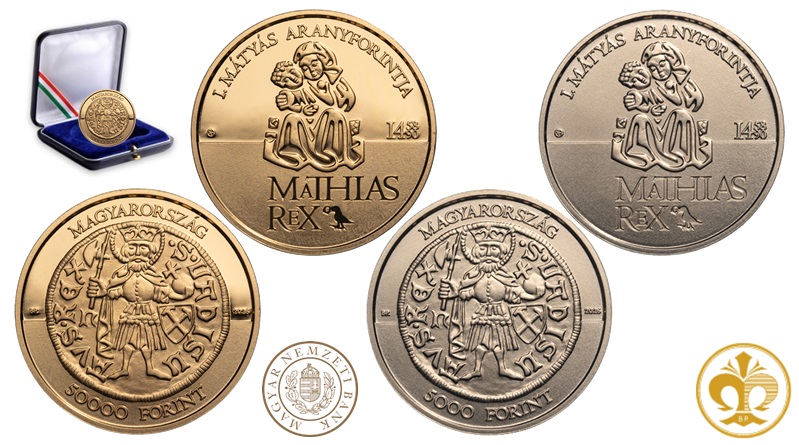
| Denomination | Metal | Weight | Diameter | Quality | Maximum Mintage |
| 5,000 Forint | Cupro-nickel | 2.7 g. | 20 mm. | BU | 5,000 |
| 50,000 Forint | .986 Gold | 3.49 g. | 20 mm. | Proof | 2,000 |
| 50,000 Forint | .986 Gold | 13.96 g. | 20 mm. | Proof | 500 |
The base metal coins are available to purchase for their face value for collectors resident in Budapest who can visit the coin shop of the Hungarian Mint Ltd.
The gold Proof coins are encapsulated and accompanied by a numbered certificate of authenticity. A presentation case is available as a separate purchase. For additional information, please visit the e-webshop of the Hungarian Mint.
Spain - Real Casa de la Moneda
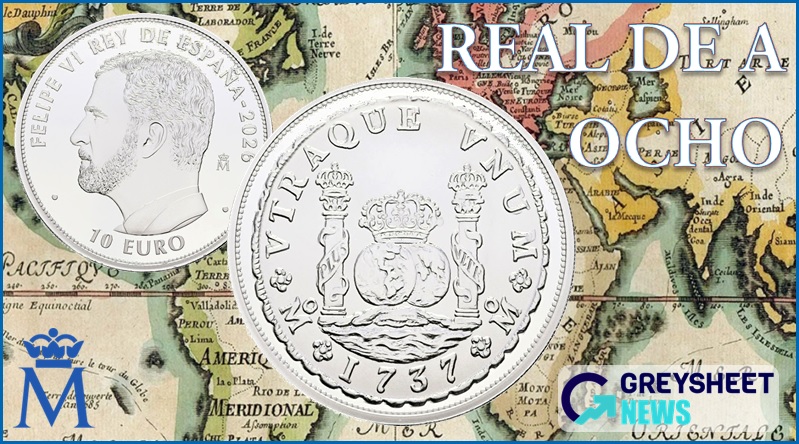
Joint-Issue of Silver Proof Coin Set Traces the Origins of First Global Currency
The FNMT – Real Casa de la Moneda releases their first-ever collector coins in partnership with the Royal Canadian Mint. The two-coin programme explores the legacy connection and early monetary links between Spain and Canada. It is also the first time that the Real Casa de la Moneda have struck pure silver ounce coins. The programme highlights a common numismatic heritage that has influenced the monetary history of both nations.
The Spanish eight reales silver coin represents one of the most emblematic and recognisable modes of Spanish numismatics and was the first truly globally circulating currency of its time. The eight reales coin, produced in the colonial Mints of the Spanish Empire, circulated across five continents as a standard basis of currency in international trade and everyday transactions.
The real de a ocho, simply translated as ‘royal of the eight’, was minted since the Spanish monetary reform of 1497 and was intentionally developed to correspond to the large silver thalers circulating in the German states and kingdoms.
As Spain’s colonies emerged as independent countries, production of the classic eight-reales coins ended alongside their independence beginning in the 1820s, with mints such as Potosí in Bolivia striking their last pieces around 1825 and Lima in Peru around 1824. In Spain itself, the classic coins continued to be produced until the 1860s with the final pieces minted right before Spain transitioned its currency from the real to the peseta in 1868 and 1869.
The reverse replicates the reverse design seen on the eight reales coins minted in Mexico during the rule of Philip V, King of Spain from 1700 until 1746. The first Mexican columnario coins were minted in 1732, its name refers to its distinctive design which depicts the Pillars of Hercules on waves flanked by two crowned hemispheres and the inscription + VTRAQUE VNVM + (Both are One) shown above the primary design. The mintmarks MO and year 1737 are indications of the Mint where they were produced and placed below the pillars and hemispheres. The obverse features a left-facing portrait of King Felipe VI, to the right of the effigy is the distinctive crowned M mint mark denoting the Mint of Madrid. Above the primary design along the upper rim is the legend FELIPE VI REY DE ESPAÑA – 2026. The denomination 10 EURO is shown below the King’s likeness.
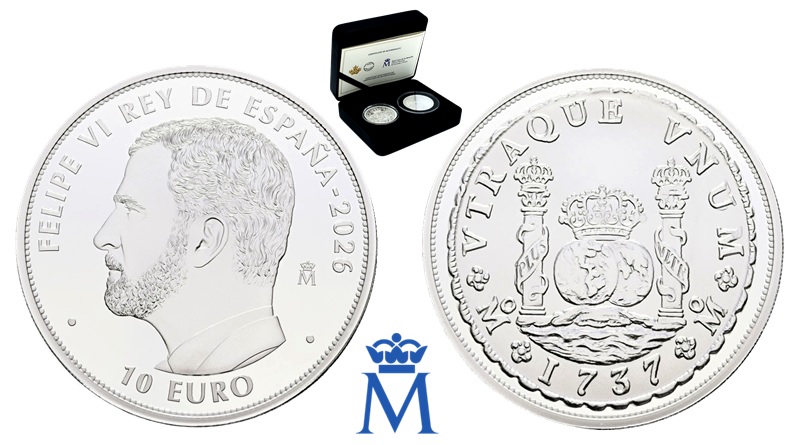
| Denomination | Metal | Weight | Diameter | Quality | Maximum Mintage |
| 10 Euro | .999 Silver | 31.1 g. | 37.2 mm. | Proof | 6,500 |
Each Proof quality coin is encapsulated and presented in a custom two-coin case accompanied with both a certificate of authenticity from the FNMT - Real Casa de la Moneda and Royal Canadian Mint. Of the 6,500 sets that comprise the worldwide mintage, 4,000 sets will be distributed exclusively in the Americas. The remaining 2,500 will be retailed by the FNMT-RCM, exclusively for worldwide distribution. For additional information on this two-coin set, please visit the e-webshop of the Real Casa de la Moneda.
Related Stories (powered by Greysheet News)
View all news
New coins from New Zealand, Oman, and the United Kingdom.

New coins from Switzerland, France, and the United Kingdom.
New coins from Italy, Poland, and the Philippines.
Please sign in or register to leave a comment.
Your identity will be restricted to first name/last initial, or a user ID you create.
Comment
Comments