

Netherlands. Historic Silver Rider Ducaton Design Features on Proof Gold and Silver Restrikes
The Royal Dutch Mint release their annual gold and silver restrikes of one of the best-known trade coins.
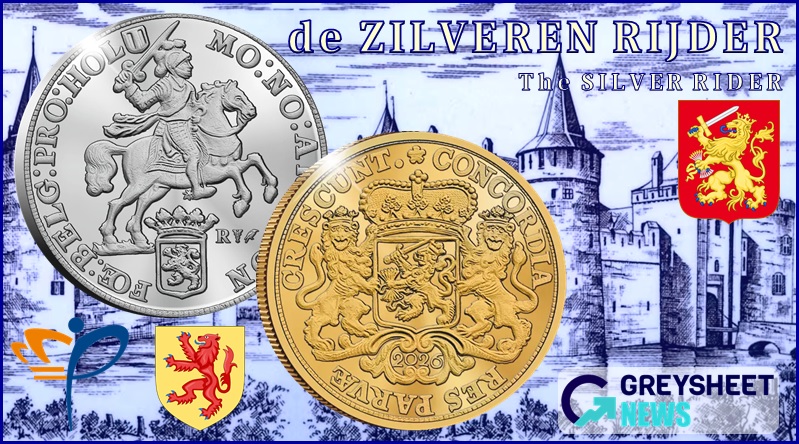
The Ducaton monetary instrument is one of the oldest coins in the Netherlands that was introduced during the era of governance of the Spanish Netherlands in 1618. From 1659 onwards, the Ducaton was also issued by the Northern Netherlands and because of its reputation as an exceptionally minted coin with a reliance of weight and fineness, it was one of the most widely used form of commerce in many parts of the world.
Every year, the Royal Dutch Mint issues a restrike of this coin and for 2026, the restrike design is inspired from the 1756 original ducaton issue from the historic province Holland. Ducaton coins were minted by all the Dutch provinces from 1659 onwards and all of the provincial coins featured a knight on horseback, as well as the specific coat of arms of the province where the coin was minted. From their first mintage, the ‘Silver Rider’ was produced from a silver fineness of .941 with a weight of 32.779 grams and a diameter of 43 millimetres.
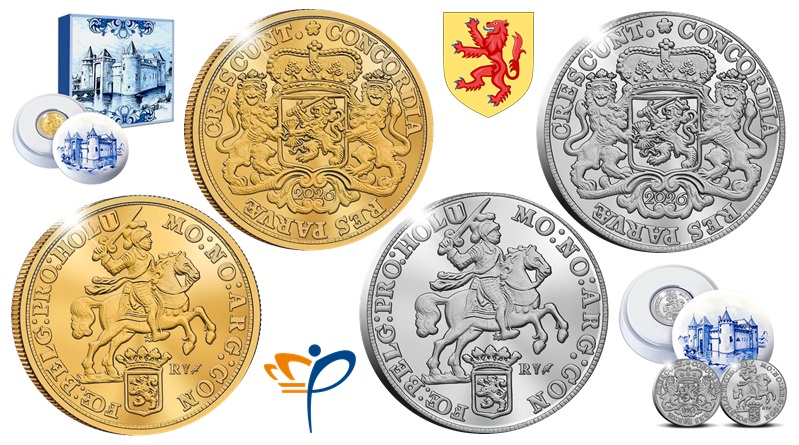
The designs are shared on both gold and silver strikes. The obverse features the Silver Rider Knight on horseback, carrying a sword in his left hand and centred. Below, a crowned crest of the Province of Holland. The primary design is surrounded by the Latin abbreviated inscription MO: NO: ARG: CONFŒ: BELG: PRO · HOL which translates as New Silver Coin of the Confederated Belgian Province of Holland. The reverse depicts a crowned coat of arms of the United Provinces, supported on either side by a crowned lion. Below the crest is an ornate cartouche with year 2026. Surrounding the design is the inscription CONCORDIA RES PARVÆ CRESCUNT which translates from Latin as Unity is Strength.
| Denomination | Metal | Weight | Diameter | Quality | Maximum Mintage |
| Ducaton | .999 Silver | 31.1 g. | 38.7 mm. | Proof | 200 |
| Kampen Florijn - piedfort | .999 Silver | 62.2 g. | 38.7 mm. | Proof | 100 |
| Kampen Florijn | 999.9 Gold | 31.1 g. | 38.7 mm. | Proof | 40 |
| Kampen Florijn - piedfort | 999.9 Gold | 62.2 g. | 38.7 mm. | Proof | 10 |
Available from the 22nd January, each Ducaton restrike is struck in gold and silver to proof quality in weights of one and two ounces. Each is encapsulated and presented in a specially designed case crafted from *Royal Delft porcelain featuring an image of Amsterdam Castle Muiderslot, one of the most recognisable symbols of former province Holland and an important historical building in the Netherlands today. For additional information, please visit the e-webshop of the Royal Dutch Mint. Collectors in North America can visit the Coin & Currency Institute partner distributor.
*In 1919, the company e Porceleyne Fles and the town of Delft in the Netherlands were both awarded the use of Koninklijke (Royal) in its name by Her Majesty Queen Wilhelmina and from then the name Royal Delft came into use

Download the Greysheet app for access to pricing, news, events and your subscriptions.
Subscribe Now.

Subscribe to RQ Red Book Quarterly for the industry's most respected pricing and to read more articles just like this.
Visit these great CDN Sponsors
CDN Sponsors






Author: Michael Alexander
 Michael’s background in both numismatics and banknotes spans more than three decades and whose activities have varied from being a dedicated world coin collector to coin & medal design, marketing, theme concept and production. His additional interests include banknote research and in 1997, he founded the London Banknote and Monetary Research Centre to further these interests and activities. The company continues to offer monthly currency bulletins to both online and printed publications which includes information about the latest banknote news and releases from Central Banks and Monetary Authorities around the world. Michael has been a contributor to COIN NEWS magazine based in the UK since 1998 where many of his in-depth interviews, articles and bulletins have been published.
Please sign in or register to leave a comment.
Your identity will be restricted to first name/last initial, or a user ID you create.
Comment
Comments